Based in Chicago Creative Tech Dev
Reality Hack at MIT
Reality Hack at MIT / Reality Hack at MIT   Reality Hack at MIT / Reality Hack at MIT    Reality Hack at MIT / Reality Hack at MIT   Reality Hack at MIT / Reality Hack at MIT   

Reality Hack, January 2025

An intensive mixed reality hackathon at MIT where our team built JazzCasters — a music-driven spellcasting tower-defense experience on Meta Quest 3. Awarded "Best Implementation of Hand Tracking" on the Meta Quest track.

Category Mixed Reality / Game Dev
Role Programmer
Duration 48 Hours
Platform Meta Quest 3

Reality Hack & JazzCasters

Overview

How the hackathon shaped the project.

click to flip

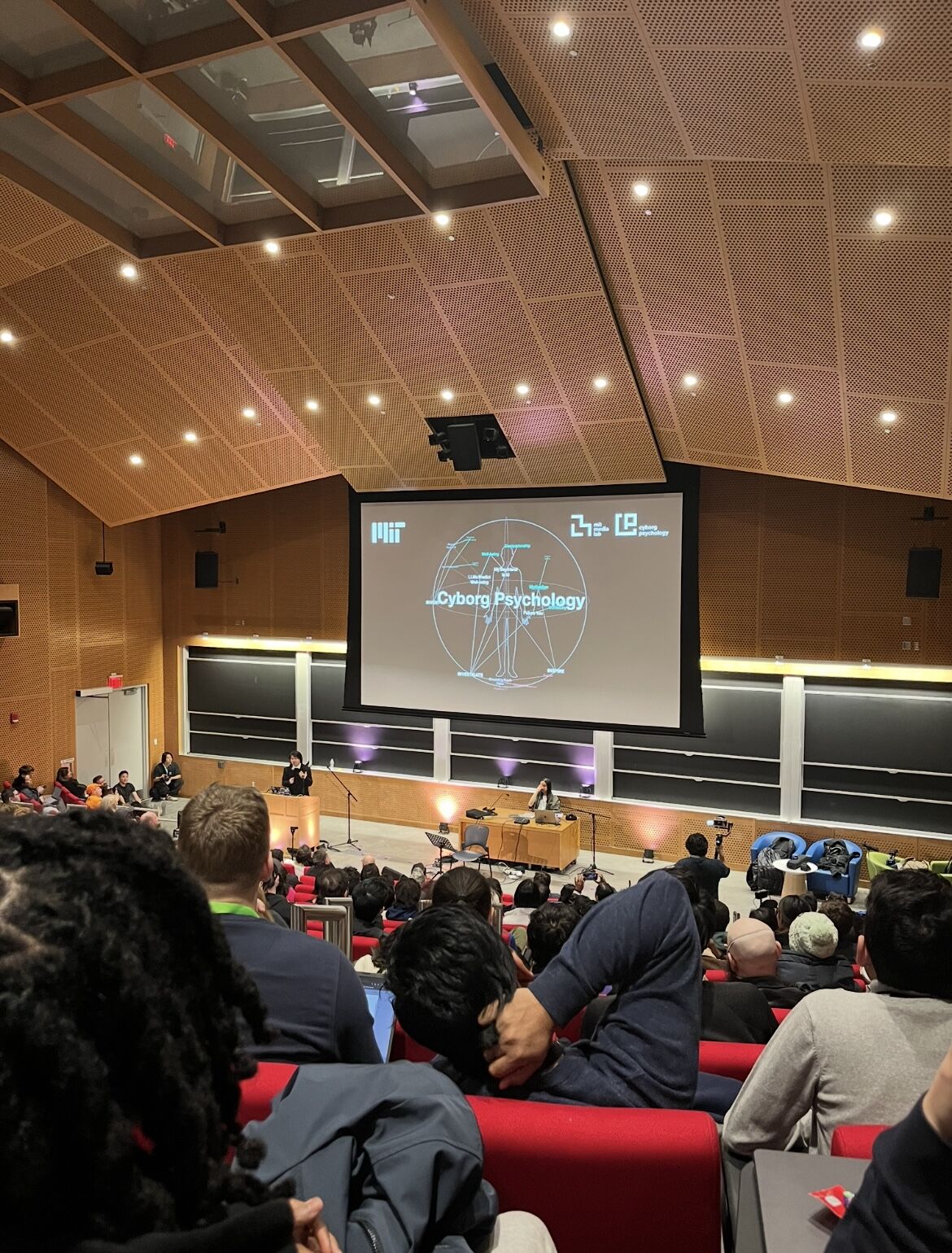
Reality Hack at MIT is an intensive mixed reality hackathon co-organized by Reality Hack, Inc. and VR/AR MIT. As a Programmer, I focused on building core interaction systems for a mixed reality experience targeting the Meta Quest 3 under a rapid 48-hour prototyping schedule.

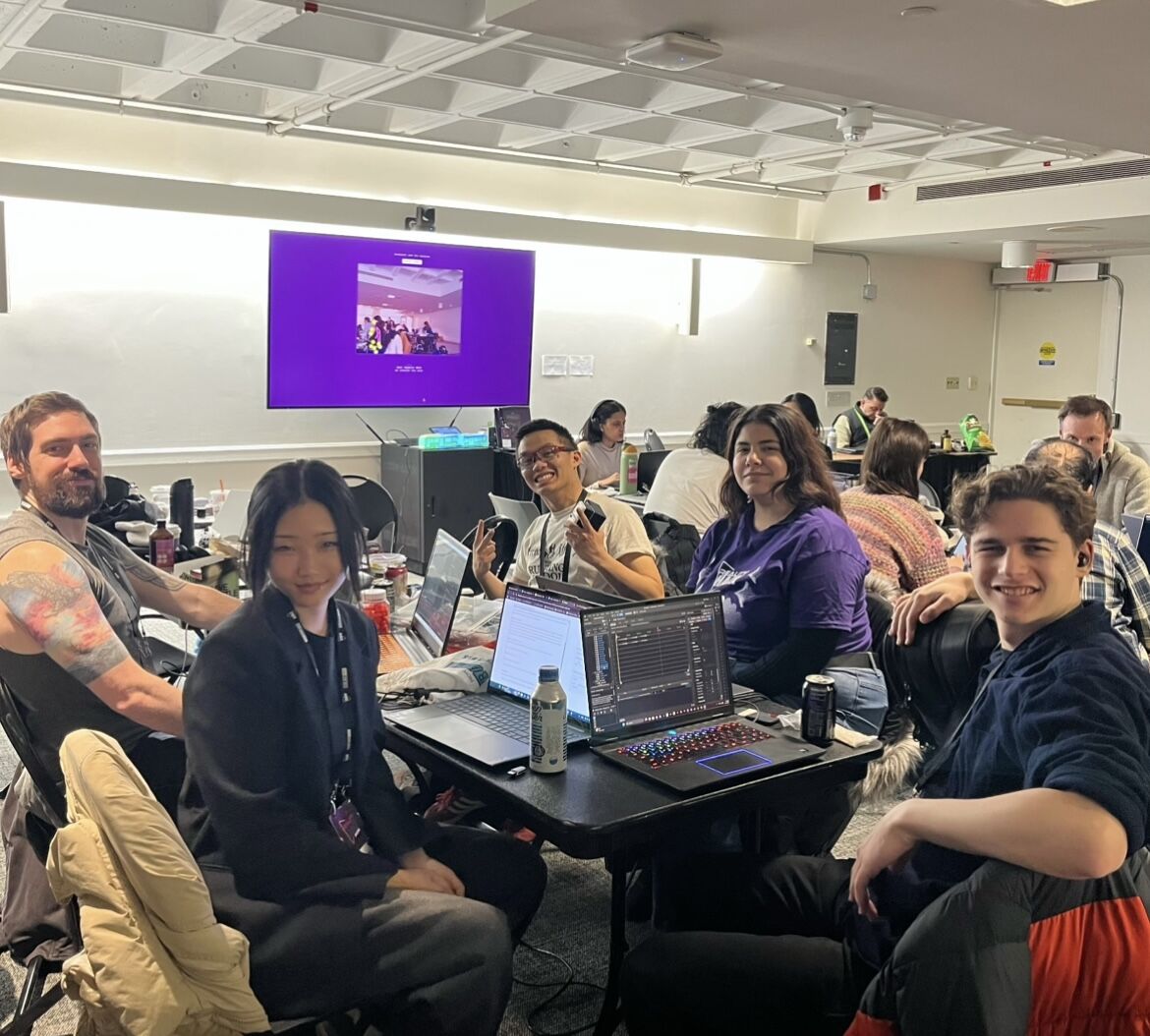
Over 48 hours of little to no sleep, our team pushed through rapid prototyping, debugging, and countless late-night problem-solving sessions, surrounded by people dreaming out loud about their projects and futures beyond the room.

This project became a reminder that I don't have to choose between structured engineering work and creative exploration. Instead, I can let both coexist—feeding into each other through mixed reality interaction design, experimentation, and collaboration.

Reality Hack team
Reality Hack team

What I Did

Core systems and responsibilities.

click to flip
  • Designed and implemented core mixed reality interaction systems in Unity (C#) targeting Meta Quest 3, integrating the Meta XR Core SDK and hand-tracking APIs for real-time spatial input.
  • Contributed via a structured source control strategy using GitHub, enabling parallel development and stable iteration within a 48-hour rapid prototyping constraint.
  • Delivered a fully functional mixed reality prototype within 48 hours, presented to judges and live testers on-site at MIT.
  • Awarded "Best Implementation of Hand Tracking" on the Meta Quest track sponsored by Meta, recognized for both technical execution and interaction design.
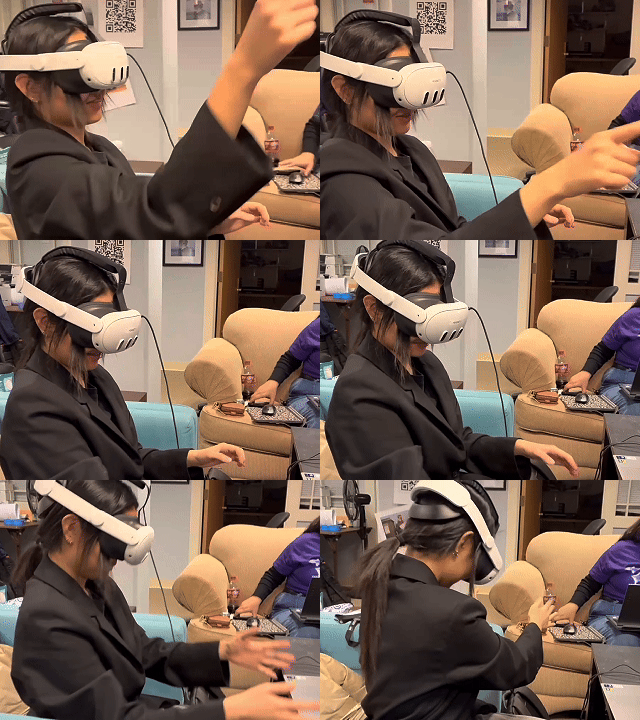
Reality Hack gameplay demo

Project: JazzCasters

The game born from Reality Hack.

click to flip

JazzCasters is the mixed reality game our team built during Reality Hack at MIT—an interactive music-driven spellcasting tower-defense experience where players use hand gestures to compose music and combat enemies in real time.

The player steps onto the stage as the headlining musician, surrounded by four instrument towers ready to amplify the sound. As hostile creatures pour in, intent on killing the vibe and silencing the performance, the player must protect the party by wielding music itself as a weapon.

Spells are cast through intentional, easy-to-learn hand gestures designed to feel expressive rather than technical, making musical spellcasting feel playful and intuitive.

JazzCasters: Mechanics

How spells, towers, and music connect.

click to flip

Each gesture maps to either the spawning of a musical instrument or the spawning of a power-up orb, giving players direct control over both sound and strategy.

Instrument
Musical instruments define how each tower attacks. An instrument can be dragged into the slot on top of a tower, where it produces a unique sound and attack pattern. Once placed, instruments automatically attack approaching enemies using rhythm-based mechanics.

Power-Up Orb
Power-up orbs modify how an instrument behaves in combat. An orb can be dragged and applied to any instrument tower, enhancing it with effects such as increased attack power or altered attack patterns. These upgrades allow players to strategically shape both the music and the flow of combat.

Reality Hack at MIT
Reality Hack at MIT

JazzCasters: Stakes

What happens if the music stops.

click to flip

The towers and the player each have a health bar that decreases when enemies reach and attack them. If the player’s health reaches zero, the party is over—the music stops, and the stage falls silent.

By tying game state directly to musical energy, JazzCasters keeps players in a constant loop of listening, reacting, and re-composing the battlefield through sound.

Reflection

Why this hack shifted my path.

click to flip

The real risk at Reality Hack wasn’t failing a prototype—it was not moving at all. Working alongside people who cared deeply enough to stay up too late chasing half-formed ideas reminded me why I build things in the first place.

Somewhere between programming, art, late-night problem solving, and battling with Unity, I rediscovered old ambitions I’d quietly folded away. This experience showed me that “serious” software work and creative practice don’t have to compete; they can inform each other and grow together.

I’m grateful for the mentors and collaborators who made that possible, and our team is continuing to develop the project beyond the hackathon.

Reality Hack development

Technologies

Tools that powered the prototype.

click to flip
Unity C# Meta Quest 3 Meta XR Core SDK Hand Tracking GitHub Rapid Prototyping Game Design Audio Systems Gesture-Based Input

Viewed cards

Click a card to flip it, or put cards down on the table.